Does a Comma Go After Once Again
The Optional Comma
May ane, 2018 by ProofreadingPal in Writing Fiction
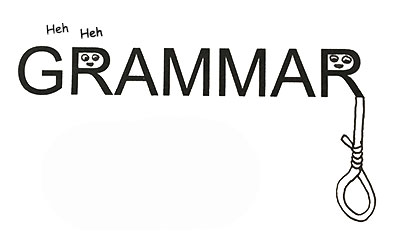
English grammar own't easy, and ultimately, later you've studied and swallowed grammer books until you only can't have it anymore, the final insult may be that sometimes it just comes down to personal preference.
Such is the case with the optional comma. That's a comma that can go or not get somewhere depending on what you think works all-time. It sounds bully, but actually, it's grammar's version of giving y'all enough rope to hang yourself.
Sigh.
Grammer Matters
 Ultimately, the point of all grammar is to aid the reader understand what'southward going on. Take the post-obit famous example:
The panda eats, shoots, and leaves.
As opposed to the intended statement:
The panda eats shoots and leaves.
So the first affair to know well-nigh optional commas is that they appear only occasionally. The majority of commas are mandatory. You can't just stick a comma anywhere and merits the sentence looks better that way.
Grammer Rules Can't Cover Everything
Space is big. Actually big. You just won't believe how vastly, hugely, mind-bogglingly large it is. I mean, you may recollect it'due south a long way downwardly the road to the chemist, but that'due south only peanuts to—
Oh await. I meant, language is big. Really big. You may think you've read a lot of books, but that'south just peanuts to seeing the number of means and means that people can put words together.
By their nature, grammer rules are anticipatory. Want to put extra info in that phrase? In that location'south a rule for that. Want to imply that some information is more important than other information? There's a rule for that. Want to advise some information, then deny it, and offering some other data instead? In that location'south a rule for that.
But sometimes the rules merely take to give way to bones readability. Commas often go optional when sentences are circuitous, or merely plain long, and the reader could utilise a picayune break.
Conjunctions
A classic optional comma shows up with conjunctive structures. The rule is that when you have two complete sentences joined by a conjunction, the comma goes before the conjunction:
I have several things to buy, simply I don't have enough coin.
When what comes later on the conjunction is not a complete sentence, yous don't put a comma before the conjunction.
I have several things to buy but non enough money.
Even so, when what comes before or after the conjunction is complicated by length or emphasis or change in thought, that comma becomes optional. And so both of the following are correct:
I have several things to buy on the shopping list my female parent wrote out for me yesterday but only a few things on the list my sis and I wrote together the day earlier when I had more money.
and
I accept several things to buy on the shopping list my female parent wrote out for me yesterday, but only a few things on the list my sis and I wrote together the solar day before when I had more money.
Personally, I like the second version better.
"Non only but also" has an optional comma when you really want to stress that contrast, and sometimes "neither . . . nor" can apply a heave as well.
Interjections
Commas go around "of grade" and "in fact," and other mild interjections, and this used to be 100 percent mandatory. These days, you don't have to put a comma in front of the interjection if it direct follows a conjunction.
Geraldine asked a lot of people, and in fact, she got results.
It'south truthful that "and, in fact," is fine, but it'due south besides a bit cluttered for today's tastes.
Adjectives
When we put a lot of adjectives in front of a noun, we use commas to carve up them.
She has the cheaper, faster, smarter version of that software.
The optional comma comes in when the adjective-noun pairing can as well be seen as a ii-discussion noun. Is "babe" an adjective in "baby buggy," or is "baby" part of the noun, equally in "tooth decay" and "activity figure"?
And then, here we have an optional comma where, over again, both are correct:
It'due south stupid to fight in a dangerous, burning building.
and
It's stupid to fight in a dangerous burning edifice.
Introductory Phrases
I'g planning to devote a whole post to this one (oh, the excitement!) because putting a comma after an introductory phrase relies on a host of factors. For this post, we'll deal with length.
One time once more, these are both right:
While sunbathing with friends, we all forgot to reapply our sunblock.
and
While sunbathing with friends we all forgot to reapply our sunblock.
Readability is over again key, which means that people by and large put a comma afterward a long introductory phrase but not after a short 1. There is no existent rule virtually that length, however.
Repetitive Emphasis
Sometimes we want to stress something strictly for the drama of it, and i way to do that is past repetition. Separating that repetition with commas is, again, optional. (And did you find that in that last sentence I separated out "once once more" with commas, whereas I didn't exercise it in the sentence above? Readability, baby!)
Then anyway, both of these are right:
Frodo but walked, and walked, through that whole movie.
and
Frodo just walked and walked through that whole movie.
Then are:
The dead dragon cruel from the sky, and fell with a boom.
and
The dead dragon cruel from the heaven and barbarous with a boom.
So, (optional comma) equally y'all tin see, (not optional comma) there are many instances in which the writer's, (optional comma) and the editor'due south, (optional comma) personal judgments come into play, (not optional comma) and if you find yourself unsure sometimes, (optional comma) only ask us hither at ProofreadingPal! (optional exclamation betoken)
Julia H.
Source: https://proofreadingpal.com/proofreading-pulse/writing-fiction/the-optional-comma/
0 Response to "Does a Comma Go After Once Again"
Postar um comentário